Stop building the wrong thing faster. Lead with direction.
The Mearra Method is a modern framework for enterprise organisations that accelerates digital execution, eliminates scope waste, and turns complex organisational change into a seamless, collaborative transition. We wrote an entire book on the Mearra Method, but in this article we are introducing the main idea and the core elements to you.
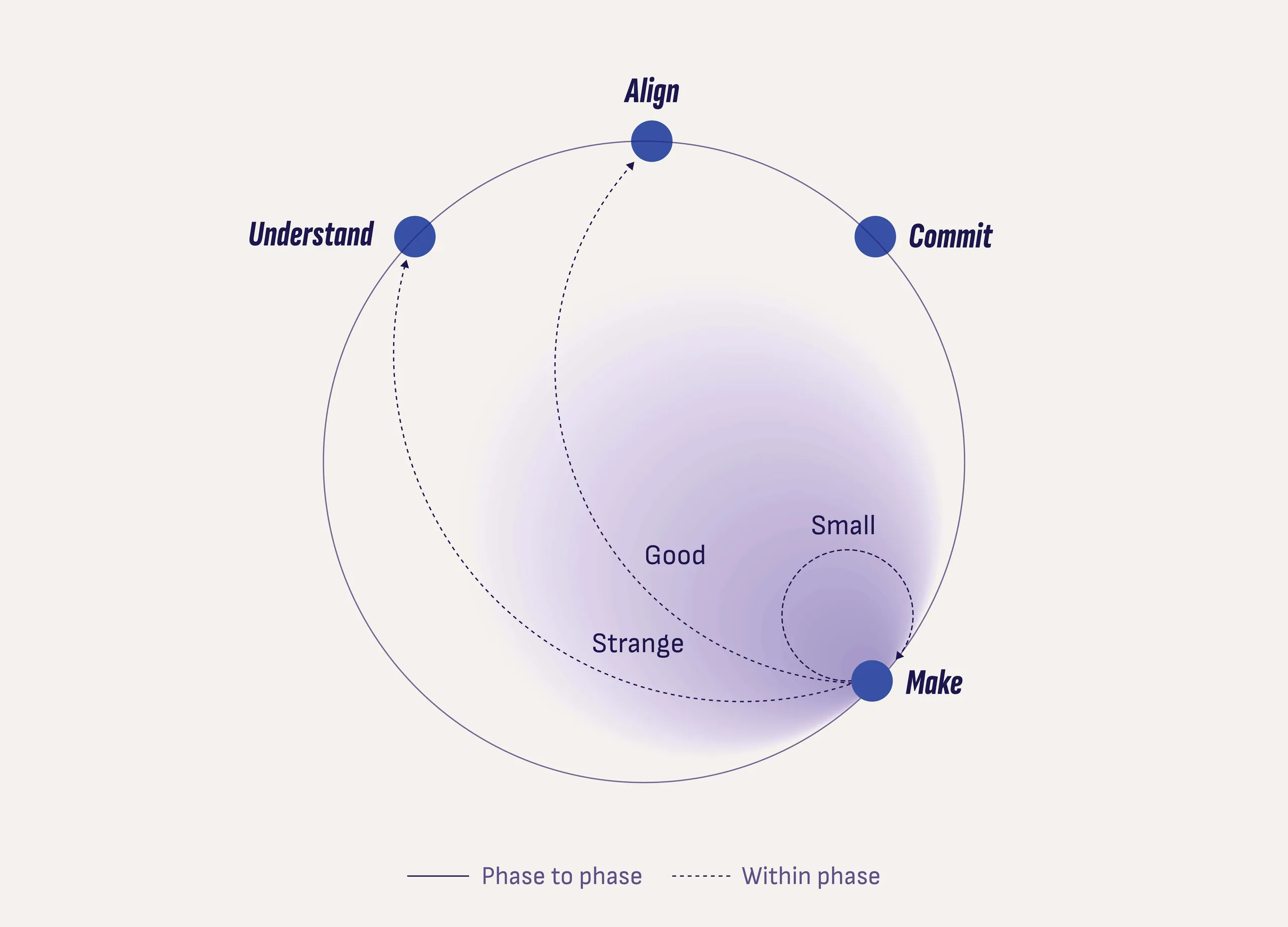
The Mearra Method functions as a continuous, iterative loop—cycling through Understand, Align, Commit, and Make—designed to keep development moving forward while ensuring no valuable innovation is lost. Crucially, when new concepts surface during active production in the Make phase, they are routed dynamically based on their nature so current delivery remains on track. Small adjustments are tested and built directly within the Make phase via rapid daily iterations. Good ideas that add broader capability route back to Align to be evaluated and scheduled into future release phases. Meanwhile, Strange or radical insights loop all the way back to Understand for quick, low-cost validation. This multi-tiered feedback mechanism guarantees that development steadily moves forward and delivers live results, while ensuring worthy ideas are captured, refined, and never left on the table.
Traditional software development relies on speculative documentation and long discovery phases before stakeholders ever see working software. The Mearra Method replaces abstract wireframes and static specifications with AI-generated Proofs-of-Direction (PoDs) — clickable mock software generated in real time to align technical, business, and growth teams from day one.
Proof-of-Concept vs. Proof-of-Direction
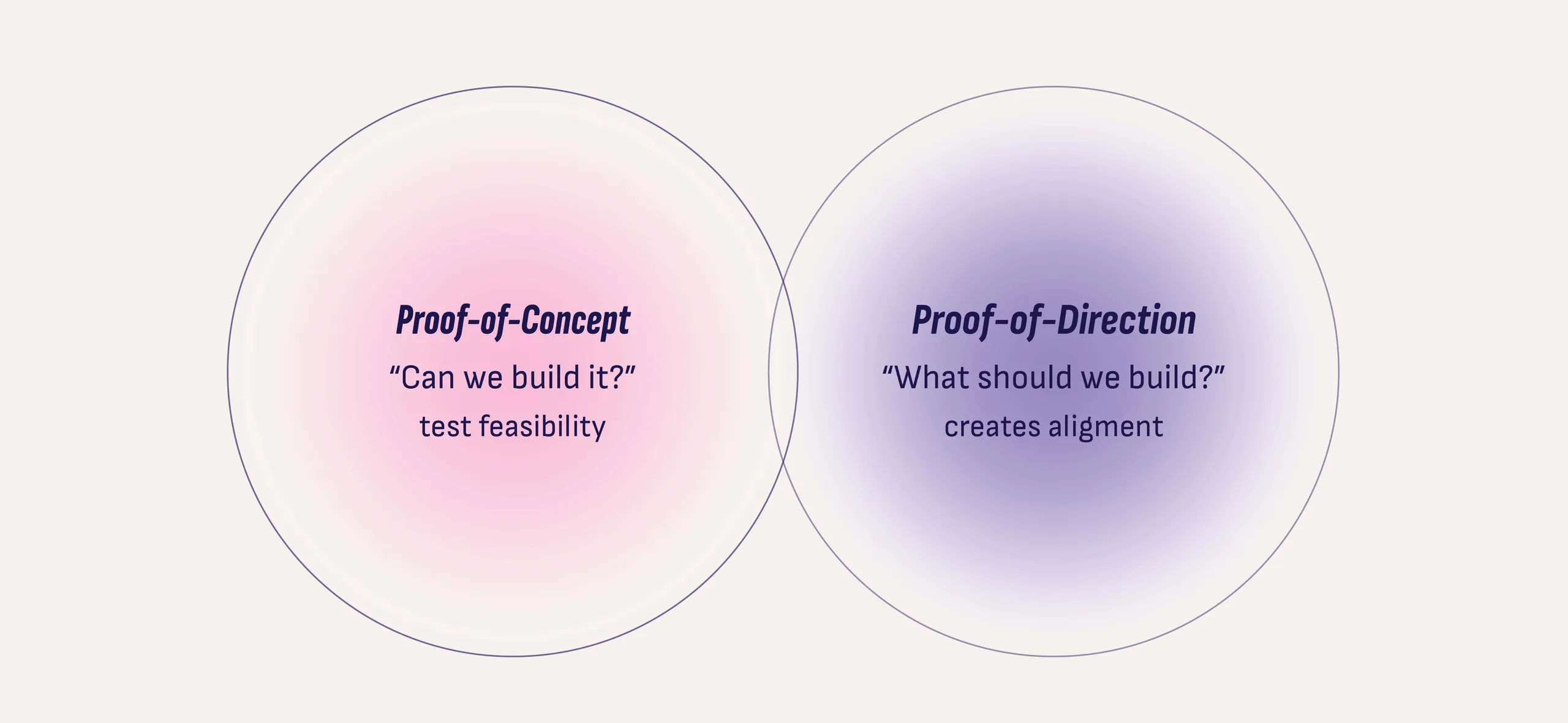
Most enterprise initiatives stall because teams spend months testing technical feasibility rather than validating strategic intent.
- Proof-of-Concept (PoC): “Can we build it?” — Tests technical feasibility.
- Proof-of-Direction (PoD): “What should we build?” — Builds shared stakeholder alignment before committing production capital.
Frictionless alignment for enterprise teams
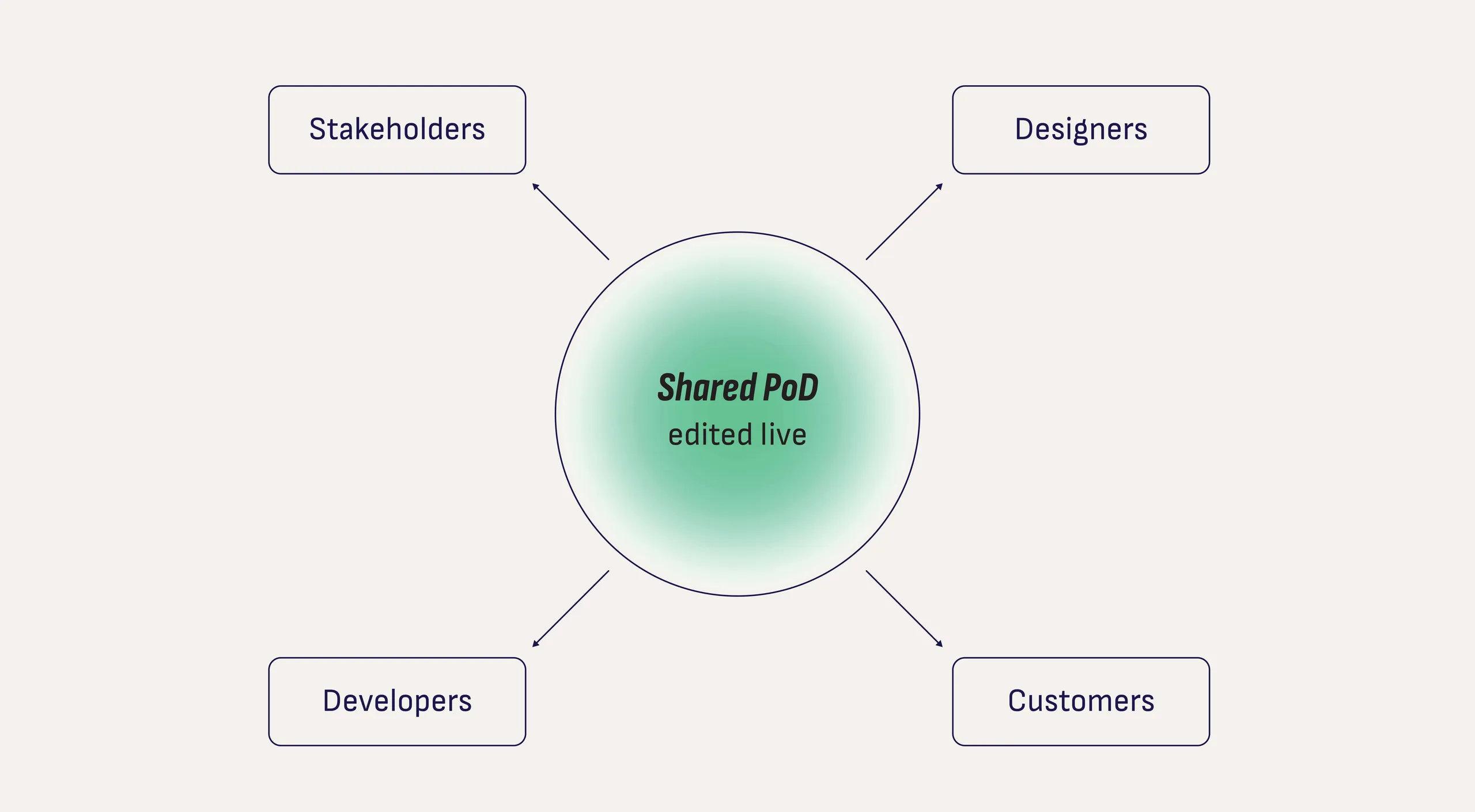
- Eliminating the Abstraction Gap: Replaces UML diagrams and Post-it notes with clickable software as the primary medium for collaboration.
- Dramatically Shortening Feedback Loops: Feedback cycles drop from weeks to live minutes during stakeholder workshops.
- Ego-Free Co-Creation: Because PoDs are generated by AI rather than manually crafted by individuals, team dynamics shift from “defending a design” to “collectively solving the problem.”
- Smoothing Change Implementation: Co-creating software in real time democratises ownership, drastically reducing organisational resistance during rollout.
In an AI-driven development era, code generation is no longer the bottleneck — alignment, clarity, and decision speed are.
How the framework works: the 4-step loop
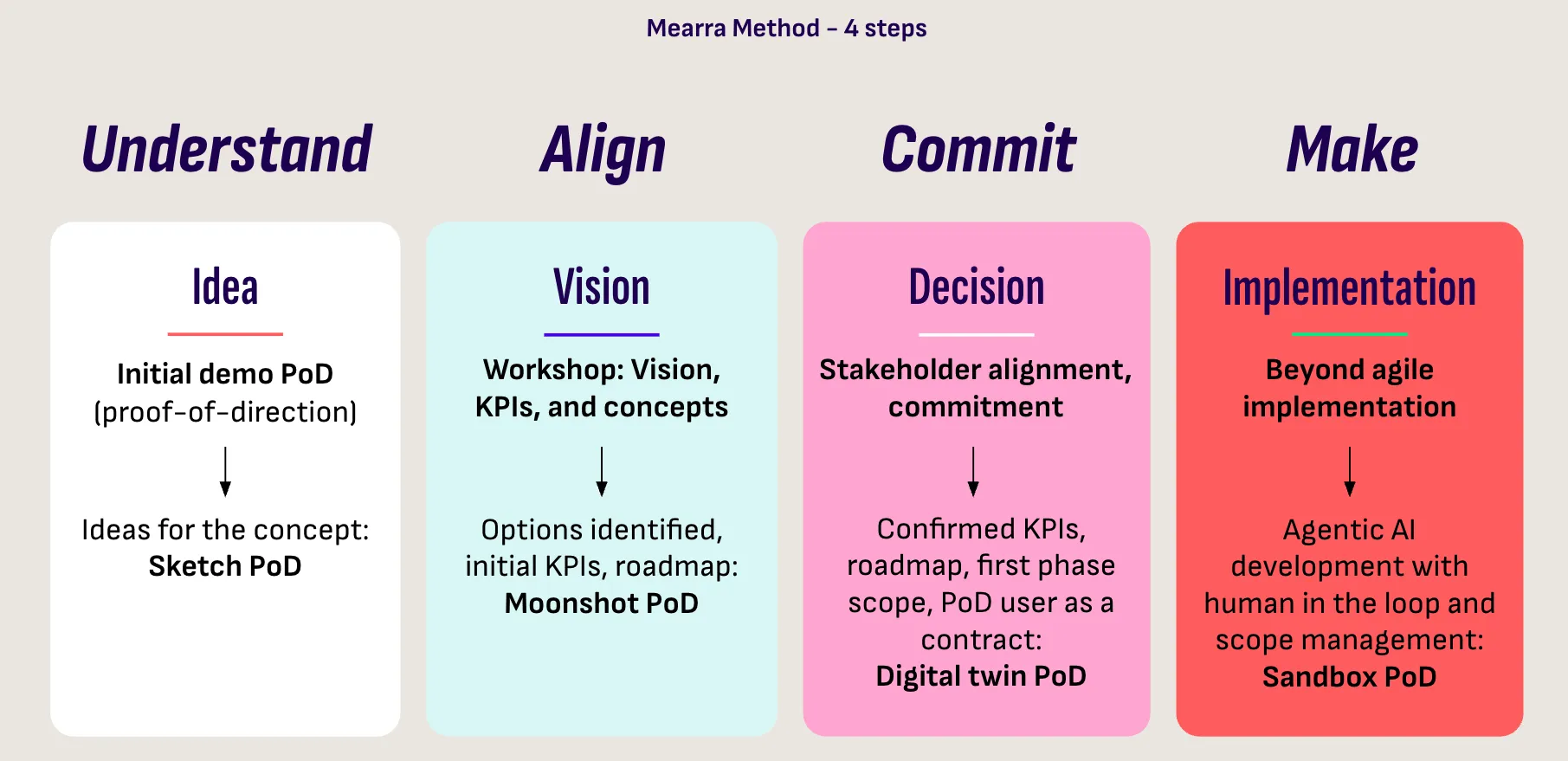
- Understand (Sketch PoD) — “Is there something here?” A fast, cheap conversation typed straight into AI software to reach a quick go/no-go decision.
- Align (Moonshot PoD) — “What could this become?” A one- to two-day workshop where key stakeholders map out an unconstrained ideal future state.
- Commit (Digital Twin PoD) — “Exactly what, and what will it cost?” Freeze the Phase 1 production scope, define must-win battles, and calculate exact ROI and development costs.
- Make (Sandbox PoD) — “How do we best build it?” Daily production sprints paired with isolated Sandbox PoDs for safe experimentation.
Interested in making change?
Wish to get the book to yourself? Participate in book draw!
Would like to know your current status with AI maturity? Take a test!
Ready to get started with our 2-day AI opportunity sprint, with 100% money-back guarantee? Read more and sign up!